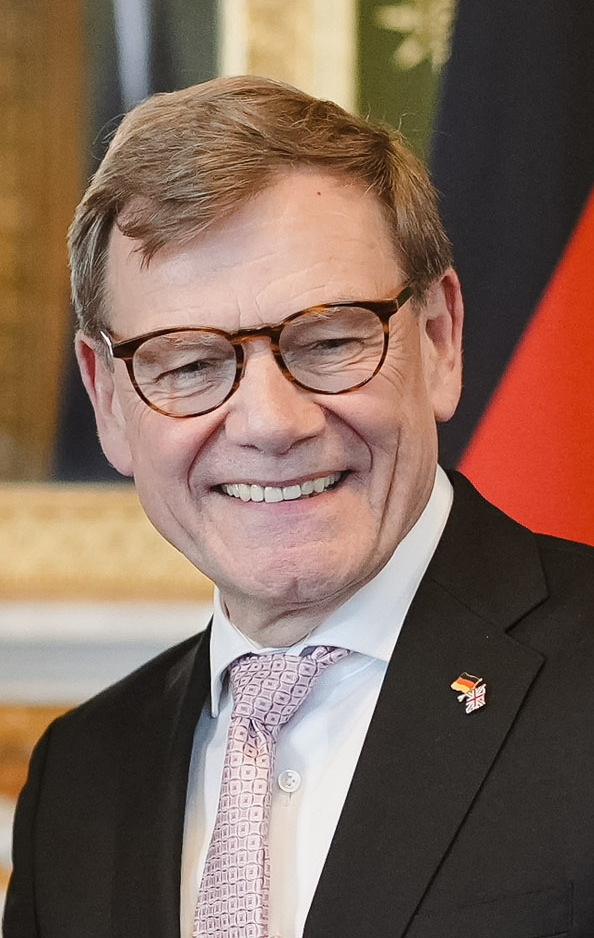
Germany's Diplomatic Balancing Act: Johann Wadephul on Gaza, Regional Stability, and the Path Forward
The Middle East finds itself at a critical juncture, grappling with multifaceted crises that demand urgent international attention and sophisticated diplomatic engagement. At the forefront of Germany's efforts to navigate these turbulent waters is Johann Wadephul, a prominent voice articulating his nation's nuanced stance on the Gaza conflict, the indispensable need for a two-state solution, and the complex challenge posed by Iran's regional influence. Germany, a nation acutely aware of its historical responsibilities, is actively pushing for de-escalation and long-term stability, recognizing that the shadow of wider regional "Krieg" (conflict) looms large.
Germany's approach, as articulated by Wadephul, underscores a commitment to humanitarian principles, international law, and pragmatic diplomacy aimed at averting further catastrophic escalation. This article delves into Germany's positions, explores the rationale behind its diplomatic initiatives, and examines the intricate balance it seeks to strike in a region fraught with historical grievances and contemporary challenges.
Germany's Stance on the Gaza War: A Call for Immediate Resolution and Humanitarian Aid
The devastating war in Gaza has become a focal point of global concern, and Johann Wadephul has unequivocally conveyed Germany's profound distress and its urgent demands for its cessation. Addressing the UN General Assembly, Wadephul's message was clear and direct: "The terrible war in Gaza is waging on. This war must end. The hostages must be released." These statements reflect a widespread international consensus on the immediate priorities: an end to hostilities, the safe return of all captives, and an immediate, substantial increase in humanitarian aid for the beleaguered population of Gaza.
The scale of human suffering in Gaza, as Wadephul highlighted, demands an unprecedented humanitarian response. Germany, alongside its international partners, has been a significant contributor to aid efforts, but the ongoing conflict severely impedes delivery and exacerbates the crisis. Wadephul’s insistence on ending the war is not merely a political statement but a plea rooted in the urgent need to alleviate human misery and prevent further loss of life.
Germany's position on the conflict is deeply informed by its unique historical trajectory. Wadephul explicitly referenced Germany's responsibility for Nazism, the Second World War, and the Holocaust, noting that "the denial of human dignity destroys life, nations, cultures." This powerful acknowledgment underscores the moral imperative that guides German foreign policy, particularly concerning Israel's security and the broader pursuit of human rights. This historical context explains why Germany, despite growing international pressure and the recognition of Palestine by several nations, is not yet prepared to unilaterally recognize a Palestinian state. This is not a denial of the Palestinian people's right to self-determination but rather a strategic decision rooted in a desire for a negotiated solution that ensures lasting peace and security for both Israelis and Palestinians.
The Two-State Solution: A Long-Term Vision Amidst Current Realities
For Johann Wadephul and Germany, the two-state solution remains the ultimate and "only way to bring peace to the Middle East." This long-standing international consensus envisions an independent Palestinian state coexisting peacefully alongside Israel, each with secure and recognized borders. While the current realities on the ground in Gaza seem to push this vision further out of reach, Germany's commitment to it remains steadfast.
Achieving a two-state solution is a monumental task, requiring sustained political will, mutual recognition, and difficult compromises from all parties. Germany's adherence to this path reflects a belief that without a political horizon for Palestinians and guaranteed security for Israelis, cycles of violence will continue. Wadephul's statements emphasize that diplomatic efforts must, even amidst conflict, continue to lay the groundwork for a future where both peoples can thrive.
The question of recognizing a Palestinian state is a sensitive one. While eleven countries recognized Palestine around the time of the UN General Assembly high-level week, Germany's reticence is tied to its historical obligation to Israel's security. This commitment does not preclude Germany from advocating for Palestinian rights but rather shapes its approach to seeking a comprehensive, negotiated settlement. Germany prefers a solution arrived at through direct negotiations between the parties, believing that such an agreement would be more durable and legitimate. This stance also highlights the practical challenges: What would a recognized Palestinian state look like amidst current territorial disputes, security concerns, and fractured governance? Germany seeks a pragmatic path that moves beyond symbolic gestures to actual state-building and sustainable peace.
Addressing Iran's Regional Role: A Linchpin for De-escalation
Beyond the immediate crisis in Gaza, Germany's diplomatic calculus extends to the broader regional dynamics, with a particular focus on Iran's role. Johann Wadephul has been explicit in calling for Iran to cease its support for armed proxy groups that destabilize the Middle East. He stated that Iran "must commit in negotiations with the United States to stop support for armed proxy groups Hamas in Gaza, Hezbollah in Lebanon and the Houthis in Yemen." This demand is crucial for de-escalating tensions and preventing a wider regional "Krieg."
Iran's backing of these groups significantly complicates efforts to achieve peace and security. Hamas, operating in Gaza, remains a primary actor in the current conflict with Israel. Hezbollah, a powerful political and military force in Lebanon, poses a significant threat to Israel's northern border and has engaged in cross-border exchanges of fire, raising fears of a broader conflict. The Houthis in Yemen have launched attacks on international shipping in the Red Sea, disrupting global trade and drawing international military responses.
Wadephul's insistence that Iran halt this support underscores Germany's view that Iran's actions are a root cause of instability. By funding, arming, and training these proxies, Iran projects its influence, challenges regional rivals, and complicates diplomatic resolutions to various conflicts. For Germany, any meaningful path to regional peace must involve Iran re-evaluating its strategy of supporting non-state actors that engage in violence. This crucial aspect of Germany's foreign policy is further elaborated upon in the related article:
Wadephul: Iran Must Halt Support for Hamas, Hezbollah. Addressing this complex issue is a key step in reducing the potential for a larger "iran krieg" in the region.
Navigating Diplomacy: Sanctions, Negotiations, and a Path Forward with Iran
While demanding a change in Iran's behavior regarding proxy groups, Germany's approach is not solely punitive. Johann Wadephul emphasized a dual strategy of pressure and diplomacy. Despite the return of snapback sanctions against Iran, Wadephul stated, "we remain open to negotiations on a new agreement." This indicates Germany's belief that dialogue, even amidst significant disagreements, remains essential for managing the challenges posed by Iran.
The "new agreement" framework suggests a desire to address not only Iran's nuclear program – which was the focus of the original Joint Comprehensive Plan of Action (JCPOA) – but also its destabilizing regional activities. A comprehensive agreement would likely seek to:
- Limit Iran's nuclear enrichment capabilities: To prevent it from developing nuclear weapons.
- Address its ballistic missile program: A key delivery system for any potential WMDs and a tool for regional power projection.
- Curb support for proxy groups: Directly addressing Wadephul's concerns about Hamas, Hezbollah, and the Houthis.
- Improve human rights within Iran: Though often a secondary concern in nuclear talks, it remains a significant point of contention for Western nations.
The challenge lies in convincing Iran to engage meaningfully on these broader issues, especially given its strategic interests and historical mistrust of Western powers. Germany, alongside its European partners, believes that maintaining channels of communication, even while imposing sanctions, provides a pathway for potential de-escalation and a more stable future. This diplomatic balancing act is a testament to the complexities of international relations in the Middle East. Further insights into Germany's willingness to engage in dialogue can be found in:
Wadephul: Germany Open to New Iran Agreement Talks.
Conclusion
Germany, through the voice of Johann Wadephul, is pursuing a comprehensive and principled approach to the escalating crises in the Middle East. Its strategy is characterized by an urgent call to end the Gaza war, an unwavering commitment to the long-term vision of a two-state solution, and a firm demand for Iran to cease its destabilizing support for proxy groups. Simultaneously, Germany keeps the door open for diplomatic engagement with Iran, signaling a belief that sustained dialogue is crucial, even amidst the application of sanctions.
The interwoven challenges of the Gaza conflict, the quest for Palestinian statehood, and the complexities of Iran's regional role collectively contribute to a volatile environment where the threat of a wider "iran krieg" is ever-present. Germany's diplomatic efforts aim to meticulously navigate these perils, advocating for humanitarian relief, fostering the conditions for a lasting peace, and striving to de-escalate tensions that could engulf the entire region in further conflict. Wadephul's statements underscore a German foreign policy that is both historically conscious and forward-looking, seeking to forge a path towards greater stability and human dignity in one of the world's most critical regions.